
Sandals
Sort by
Date, new to old


You've viewed 36 of 75 results
Welcome to Manguru!
Free shipping from €100 for Mainland Portugal.

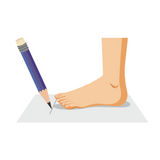
Measuring our children's feet is the most important step in buying the right size.
But why is this so important?
Because buying barefoot shoes, which are super flexible and allow the bones of the foot to move, but are tight, without margins and tight, doesn't make much sense.
So let's learn how to measure your feet correctly so that this doesn't happen!
Place the sheet on the floor and tell your child that you are going to trace the outline of his/her foot (if the baby is restless, it will be easier to ask someone to distract him/her).
The baby or child must always be standing while you are contouring.
Important note: If you are looking for shoes that will be worn with socks, you should measure with your socks on.
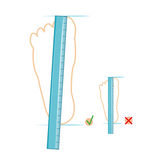
Now take a ruler and measure from the centre of your heel to your longest toe. Also measure the maximum width of your foot.
Then check the size guide for the corresponding brand (found on every product page) and add the ideal allowance of 0.8 to 1.2 cm.
Don't forget: You should repeat this measurement regularly (every 3 to 4 weeks). When the allowance is 0.4 cm or less, it's time to buy new shoes.